Positional or Deformational Plagiocephaly, often referred to as flat-head syndrome, is a cosmetic condition where a baby’s skull develops asymmetrically with a flat spot on one side of the head or the whole back of the head (brachycephaly).
It is not dangerous but requires expert evaluation to rule out more serious conditions like craniosynostosis.
At Ahead4Babies, our surgeon-led consultations provide accurate diagnosis and specialist plagiocephaly treatment – ensuring you and your baby receive the best care, guidance, and treatment available in the UK.
Call us now on 07982 706454 or 020 7487 4874
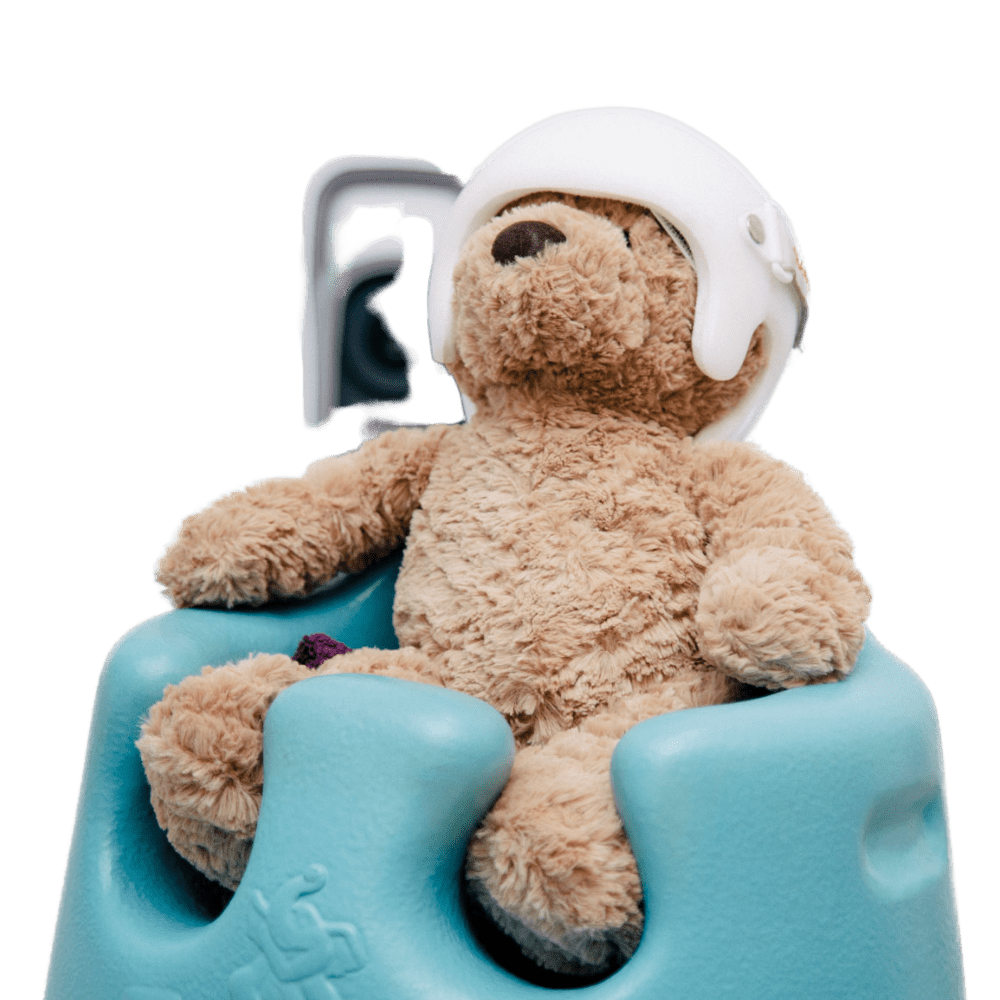

Plagiocephaly, commonly known as flat-head syndrome, refers to a malformation of a baby’s skull that causes an asymmetrical or flattened shape. Positional plagiocephaly is the most common type and can be caused by lying in the same position for extended periods or because of problems with neck muscles causing positional preference – affecting the shape of the skull.
Importantly, positional plagiocephaly is purely cosmetic and does not cause pain or impact brain development.
In contrast, conditions such as craniosynostosis, occur when skull bones fuse prematurely, potentially affecting skull growth and may require surgical intervention. Thankfully, this is extremely rare.
Here at Ahead4Babies, we can clinically assess all forms of flat-head syndrome and we specialise in treating positional plagiocephaly and brachycephaly. If you are concerned about your baby’s head shape, a timely consultation can provide reassurance, guidance, and – if needed – effective, non-invasive treatment options via our Cranioform helmet.
Both are cosmetic, painless, and treatable through repositioning or helmet therapy.



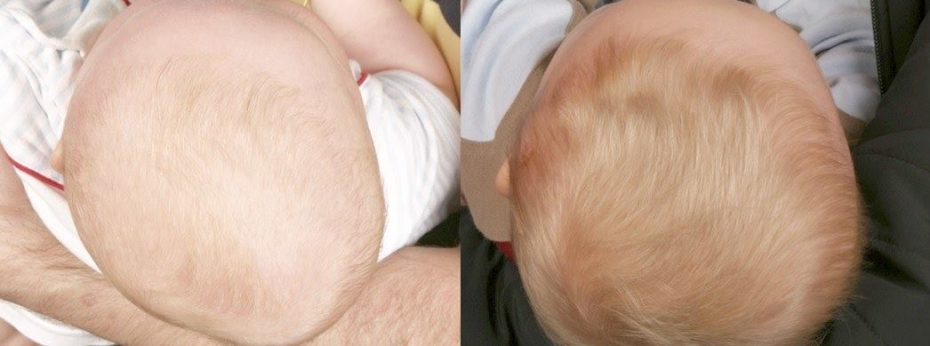
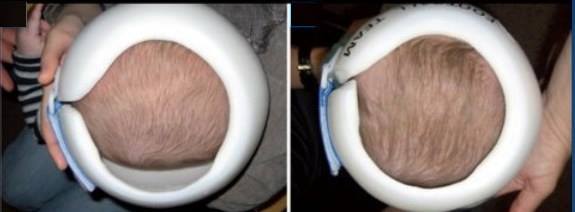
Charlie
Alfie
Positional plagiocephaly occurs due to pressure on one side of a baby’s skull, often from consistent positioning.
It is purely cosmetic and poses no danger to brain development, unlike craniosynostosis or hydrocephalus, which require serious medical intervention. Ahead4Babies surgeons expertly rule out these conditions and can recommend the best evidenced-based intervention course for your child.
Prolonged time spent lying on one side of the head during sleep can cause positional plagiocephaly. While essential for safe sleep, consistent back-sleeping can flatten soft skulls over time. Gentle repositioning and supervised tummy time can help prevent the condition or correct it in very young babies.
Premature babies have softer, more malleable skulls and often spend extended time in one position due to illness or medical care, making them more prone to developing positional plagiocephaly.
Torticollis, or tight neck muscles often present at birth (congenital), can make it difficult for a baby to turn their head, causing them to rest in one position. This restricted movement can lead to positional plagiocephaly over time.
A baby’s skull may mould into an uneven shape during delivery, especially after prolonged labour or instrumental delivery. While temporary, in some cases this results in positional plagiocephaly.
Limited space in the womb, particularly during the third trimester, can place pressure on a baby’s skull, leading to misshaped skull. This is more common with first pregnancies, pregnancies with multiples or a breech presentation.
Carrying multiples can result in restricted space for each baby, increasing the likelihood of plagiocephaly. Compression in utero can lead to flattening of the skull.

* A limited number of free assessments are available, based on a review of your baby’s head photos. If pre-paid, you can book a clinical assessment without uploading photos.
Early intervention is key to preventing positional plagiocephaly or correcting it early on. Techniques like repositioning and neck exercises can significantly improve head shape within the first six months. With timely evaluation before 4 months, 70% of cases improve without helmet therapy.
Our medical team, with over 30 years experience, can accurately diagnose plagiocephaly and brachycephaly as well as rule out more serious conditions, such as craniosynostosis. Meanwhile, whenever possible, our repositioning coach, Agi, offers expert guidance to help parents prevent or correct skull shape issues in young babies.
Upload photos of your baby’s head for a quick, professional assessment. Upload photos here →
Precise evaluation is critical in determining the best course of action for plagiocephaly.
Our expert team uses state-of-the-art techniques to assess your baby’s condition and rule out more serious issues like craniosynostosis, ensuring your child receives the correct treatment plan.
Often, we will provide parents with extensive coaching on repositioning and other conservative management techniques if your child is young enough to achieve significant improvements without helmet therapy. Our team is dedicated to ethical and unbiased support to provide you with exemplary patient care.
By the end of your assessment, you will be informed of the severity and prognosis of your child’s condition and your options for various interventions. You will also receive a report that includes your child’s measurements and scan images within 48 hours of your assessment appointment.
You will be given plenty of time and information to make the best decision for your family.
The treatment journey with us begins with an extensive assessment and consultation with our experienced surgeons to rule out conditions like craniosynostosis and get an accurate diagnosis of your child’s condition. This assessment will include manual examination and use advanced tools such as Canfield Vectra 3D imaging (often used by leading cosmetic surgeons for facial reconstruction planning).
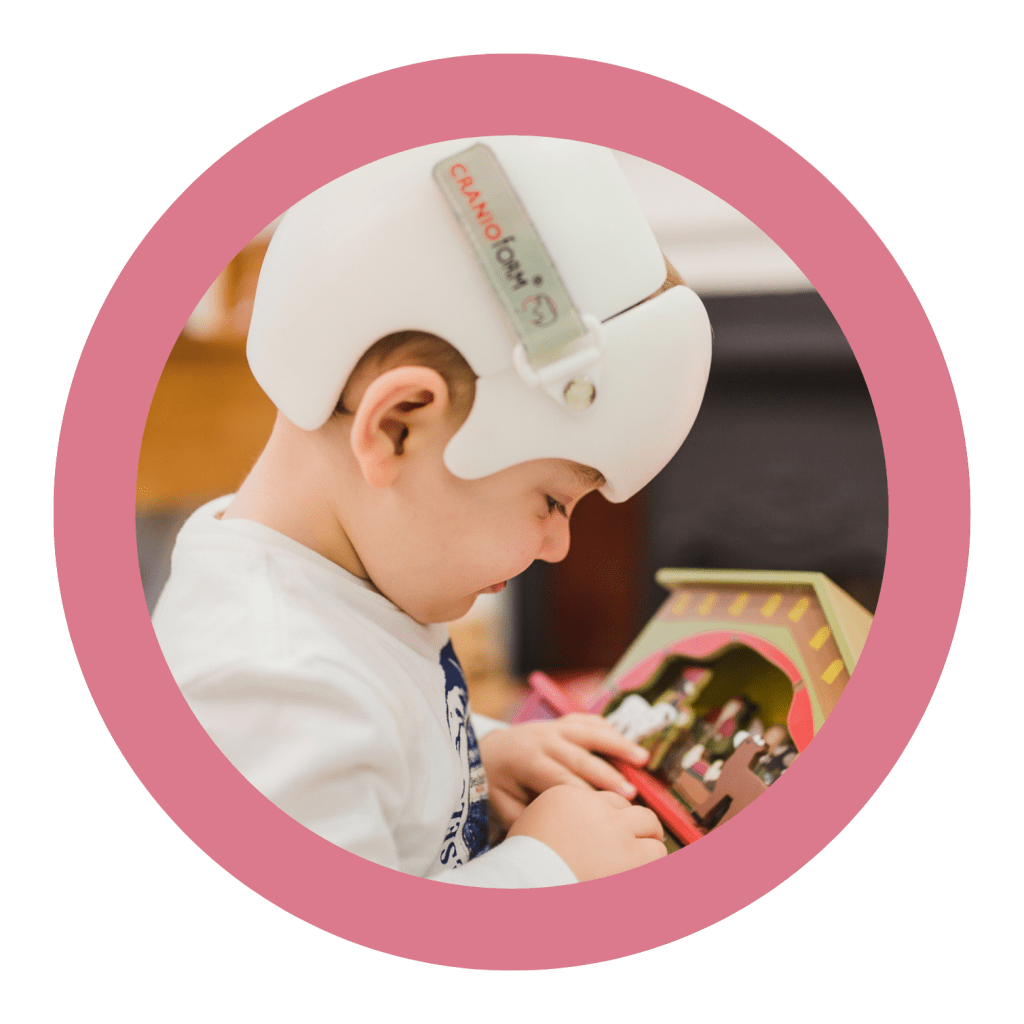
For cases requiring helmet therapy, a helmet is designed specifically for your child’s head shape using the detailed scans we have taken. The Cranioform Helmet is worn 23 hours per day, with treatment typically lasting 2–6 months. Babies under 7 months can see a 50% improvement in the first 2–3 weeks. Starting early, ideally at 4 months, can reduce treatment time to as little as 8–12 weeks, restoring a more symmetrical head shape and improving ear alignment and forehead asymmetry.

Helment therapy may not be necessary.

Repositioning may still be effective, depending on individual head shape.
Repositioning is rarely effective at this age, but may still be considered.
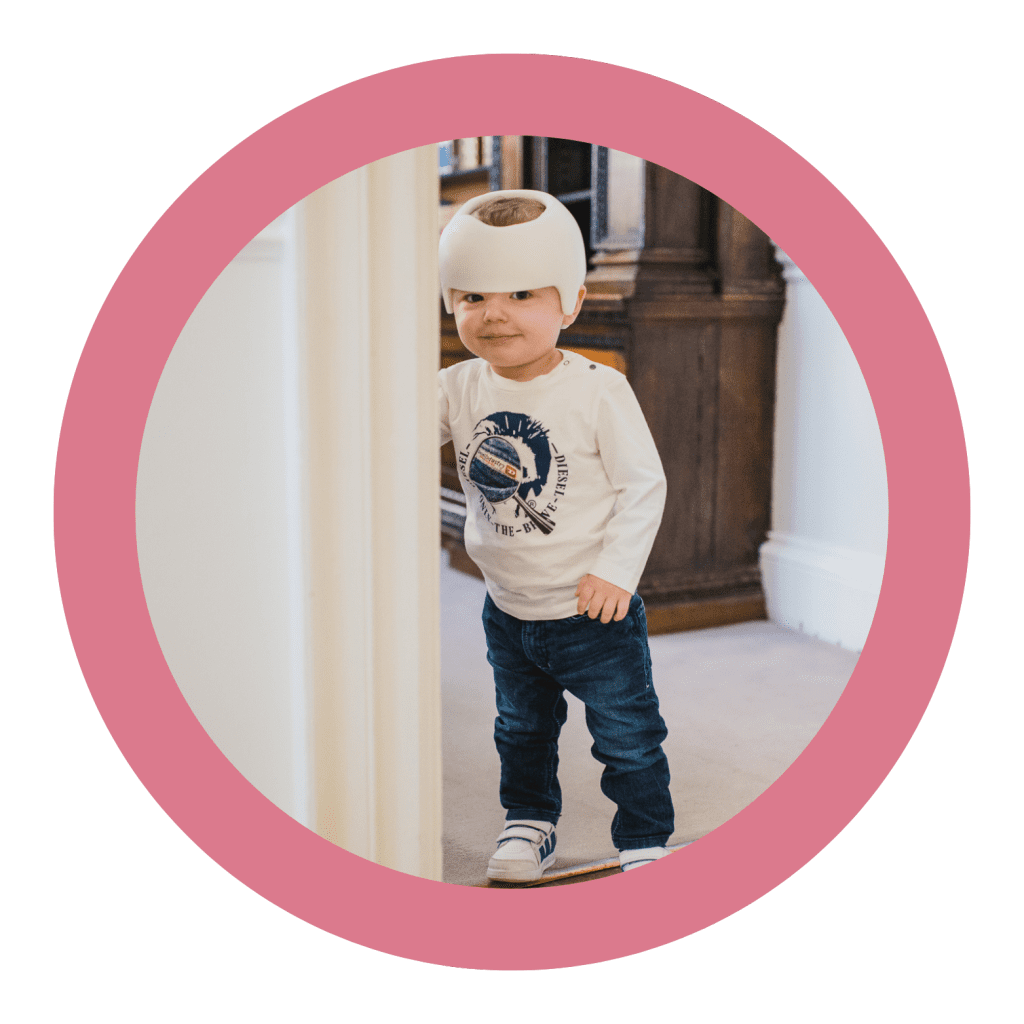
Helmet therapy will be the recommended treatment.
If caught early enough, the majority of head shape abnormalities can be corrected without helmet therapy. During the first 4 months of life, a baby’s rapid skull growth allows for significant improvement through repositioning techniques and neck exercises. In fact, when assessed at before or around 4 months, up to 70% of babies can achieve a more symmetrical head shape without a helmet.
Helment therapy may not be necessary.
Repositioning may still be effective, depending on individual head shape.
Repositioning is rarely effective at this age, but may still be considered.
Helmet therapy will be the recommended treatment.
If caught early enough, the majority of head shape abnormalities can be corrected without helmet therapy. During the first 4 months of life, a baby’s rapid skull growth allows for significant improvement through repositioning techniques and neck exercises. In fact, when assessed at before or around 4 months, up to 70% of babies can achieve a more symmetrical head shape without a helmet.
Throughout the process, you can expect patient support via email, WhatsApp, and over the phone, 7 days a week

Start by uploading pictures of your baby’s head for our experts to evaluate

Where appropriate, prevention includes stretching and positioning tips for mild and/or very young cases
Based on our photo evaluation, a thorough scan determines skull shape and treatment suitability

A personalised treatment plan and custom Cranioform helmet are created for your baby
Helmet fitting occurs two weeks after the initial scan

Adjustments are made 2–3 weeks after fitting, to ensure comfort and progress

An average of 4–5 visits occur every 4–8 weeks, for ongoing monitoring
Your final visit includes an exit scan and a before-and-after photoshoot

UK leaders with 30+ years experience.

Safe and evidence-based treatment.
Clear guidance. Compassionate support.
With over three decades of expertise, Ahead4Babies is the UK’s trusted authority in diagnosing and treating plagiocephaly. Our surgeon-led clinic provides specialist care tailored to your baby’s needs, from expert assessments to evidence-based treatments.
We’re here to help guide you every step of the way – empowering you with expert insights, clear recommendations, and compassionate support to ensure the best outcomes for your baby’s head growth.
Anterior plagiocephaly: Flattening or asymmetry that occurs in the front of the skull, potentially affecting the forehead or facial structure.
Brachycephaly: a condition where the back of the head becomes flattened, causing the skull to appear wider than usual.
Craniofacial: pertaining to the skull and face, often referenced in the context of head shape conditions and treatments.
Craniosynostosis: a condition in which the skull sutures close too early, causing abnormal head shapes and, in some cases, pressure on the brain.
Deformational plagiocephaly: another term for positional plagiocephaly, describing skull flattening on one side of an infant’s skull, typically from sleeping or lying in the same position.
Flat-head syndrome: a general term for head shape abnormalities, such as plagiocephaly or brachycephaly, caused by external pressure on an infant’s skull.
Helmet therapy: a non-invasive treatment for positional plagiocephaly, guiding the growth of the baby’s skull into a more symmetrical shape using a custom-fitted helmet.
Positional plagiocephaly: a type of flat-head syndrome, also known as deformational plagiocephaly, describing skull flattening on one side of an infant’s skull, typically from sleeping or lying in the same position.
Posterior plagiocephaly: flattening at the back of the skull, typically associated with positional or deformational plagiocephaly.
Severe plagiocephaly: a more pronounced case of plagiocephaly where significant skull asymmetry or flattening may require treatment such as helmet therapy.
Synostotic plagiocephaly: a form of plagiocephaly caused by craniosynostosis, where one or more of the skull sutures close prematurely.
Torticollis: a condition where an infant’s neck muscles are tight or uneven, often leading to a preference for turning the head to one side, contributing to positional plagiocephaly.
Plagiocephaly, also known as flat-head syndrome, refers to the flattening of one side of a baby’s head. It is usually caused by external pressure and is purely cosmetic, not affecting brain development.
Signs include visible flattening on one side of the head, or facial asymmetry (such as uneven ears or forehead).
No, most clinicians wouldn’t consider positional plagiocephaly a ‘serious’ condition, as it is purely cosmetic, not affecting brain development. However, craniosynostosis—which is a more serious, but rare, condition—should be ruled out by a specialist.
The term plagiocephaly is often used to describe flattening of one side of the head and treatment focuses on correcting side-specific skull flattening, while brachycephaly describes flattening at the back of the head and treatment would focus on making space for the head to lengthen and appear less flat. A combination of both of these conditions can be found in some patients. Part of the treatment arsenal for both conditions may involve repositioning techniques or helmet therapy, depending on severity.
Ahead4Babies’ Cranioform helmets can help treat plagiocephaly, brachycephaly or any combination of the two.
Without early intervention, such as repositioning or helmet therapy, plagiocephaly may worsen and be more noticeable. This is the case while the skull is still soft if the underlying issue that is causing the misshapen skull isn’t addressed. However, once the skull starts to harden, which typically begins between 7- 12 months of age, the head is sufficiently rigid (ossified) and can no longer be misshapen by common pressures such as laying on one side.
In many cases the head shape of an infant is far more noticeable than in an adult, as the head is a bigger proportion of an infant’s body. Therefore, although any skull asymmetry will typically remain unchanged once the skull has fully hardened, it may appear less noticeable in an adult, especially in those with thick and long hair. However, if noticeable plagiocephaly is present and you want to correct the headshape, you can only do so during the accelerated growth phase of an infant’s development and before the skull has fully hardened. The earlier you intervene, the faster the treatment and the more likely it is you can achieve a symmetrical head shape. Our helmets have been shown to be effective in infants as old as 18 months of age, but your results will take longer and can be limited if you choose to delay treatment.
Clinically-recommended, age appropriate treatment, especially when started early, is highly effective. For babies under 4 months old, repositioning can often show improvement within weeks. For older babies helmet therapy can achieve significant correction in 2-6 months, the younger the baby the quicker the treatment course. With our helmets, our patients achieve either complete symmetry or stop treatment once they’ve reached what is considered the ‘normal’ range of asymmetry (0-0.4cm).
Untreated plagiocephaly may result in permanent skull asymmetry, which is a cosmetic concern. It is extremely unlikely to cause medical complications, but issues like facial asymmetry may persist into adulthood, and could lead to tangential concerns like anxiety or body-image insecurity. In severe cases, inability to wear standard protective helmets (for bikes, skateboards etc.) and ill fitting standard glasses may also add safety issues and general inconvenience.
The earlier, the better. Treatment is quickest and most effective before 6 months of age, as the skull is still soft and malleable. A specialist can assess your baby’s condition and recommend repositioning techniques or helmet therapy if needed. Treatment is still effective past 6 months of age, but once the skull is sufficiently ossified the only reliable way to change the head shape will be with helmet therapy and this may take longer than it would have done had treatment been started earlier.
At Ahead4Babies, plagiocephaly is diagnosed through a physical evaluation of your baby’s head shape and, if necessary, advanced imaging such as 3D scans. Our experts will also rule out more serious conditions like craniosynostosis.
Copyright 2025 Ahead4Babies | All Rights Reserved