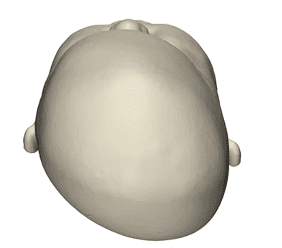
Understanding Craniosynostosis: How It Relates To Flat-Head Syndrome
What Craniosynostosis Is, What It Means, & How Ahead4Babies Can Help
In young babies, the skull consists of several bony plates that are separated by flexible joints called sutures. As babies grow and develop, these sutures close, forming the adult skull with all the bones fused together.
Craniosynostosis is a rare, serious condition caused by the premature fusion of skull sutures, which can affect head shape and growth. While it differs from positional plagiocephaly, to the untrained eye the two can appear similar in early infancy.
At Ahead4Babies, our clinical experts can rule out craniosynostosis during your child’s initial assessment and guide you toward the appropriate next steps with clarity and compassion – whether that’s seeking specialist diagnosis, surgical care or addressing flat-head syndrome with repositioning or helmet therapy.
Craniosynostosis is a condition where one or more of the skull’s sutures close prematurely, affecting normal skull growth and potentially causing head shape abnormalities and increased intracranial pressure.
Unlike flat-head syndrome, craniosynostosis is a serious medical condition that may require surgical intervention.
Read More
At Ahead4Babies, while we don’t treat craniosynostosis, our clinically-guided assessments can distinguish it from conditions like positional plagiocephaly or brachycephaly – providing parents with the clarity and guidance they need to take informed next steps.
Is It the Same as Flat-Head Syndrome?
No, craniosynostosis is different from flat-head syndrome.
While flat-head syndrome (like positional plagiocephaly or brachycephaly) is purely cosmetic and often treatable with repositioning or helmets, craniosynostosis is a rare and serious medical condition that typically warrants surgical intervention.
Further Support for Craniosynostosis
If you’re concerned about craniosynostosis or would like to explore trusted information and support, we recommend the following resources:
“We just wanted to say again a huge thank you for everything you have done for Charlie. When we came to you, we felt we were fighting against the current just to get anyone to acknowledge what we instinctively felt – that Charlie’s head shape would not improve on its own, and that he needed help.”
Charlie
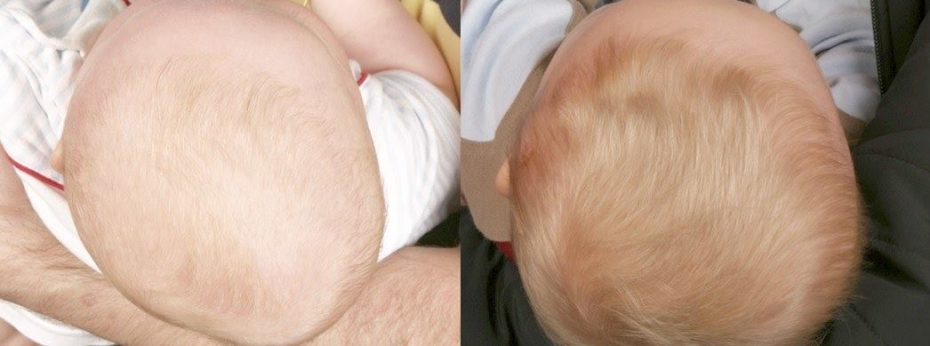
“Dear Dr Blecher We are due to meet with you on Sunday 8th July but I just wanted for you to see the before and after photos of Alfie, the most recent was taken about a week and a half ago. As you would expect, we are delighted!”
Alfie
How Does Craniosynostosis Happen?
Craniosynostosis occurs when one or more of the soft gaps (sutures) between a baby’s skull bones close too early, potentially affecting head shape and growth. While Ahead4Babies does not treat craniosynostosis, our expert assessments can help to rule it out and give you clarity on next steps.
For more detailed information, we recommend the following trusted resources:
* A limited number of free assessments are available, based on a review of your baby’s head photos. If pre-paid, you can book a clinical assessment without uploading photos.
Insights & Resources For Parents
Blog Title
Lorem ipsum dolor sit amet, consectetur adipiscing elit.
Brachycephaly: a condition where the back of the head becomes flattened, causing the skull to appear wider than usual.
Craniosynostosis: a condition in which the skull sutures close too early, causing abnormal head shapes and, in some cases, pressure on the brain.
Flat head syndrome: a general term for head shape abnormalities, such as plagiocephaly or brachycephaly, caused by external pressure on an infant’s skull.
Positional plagiocephaly: a type of flat-head syndrome describing skull flattening on one side of an infant’s skull, typically from sleeping or lying in the same position.
Torticollis: a condition where an infant’s neck muscles are tight or uneven, often leading to a preference for turning the head to one side, contributing to positional plagiocephaly.
For more information, we recommend the following resources:
Myths, Facts, & Things To Know About Craniosynostosis
Brachycephaly can often be prevented or improved with early intervention. Our expert team provides personalised assessments, preventative strategies, and evidence-based treatments, including helmet therapy, to guide your baby’s skull toward a more rounded and symmetrical shape while ruling out more serious conditions.
Preventing Brachycephaly
Not all head shape abnormalities require helmet therapy. Early repositioning and neck exercises, sometimes combined with special pillows or mattresses, are often effective within the first 6 months. If assessed before 4 months, 70% of babies can improve without a helmet using these strategies. Our repositioning coach, Agi, offers clinically-backed preventative advice to help guide your baby’s development and improve their head shape.
For cases that require additional intervention such as helmet therapy, our expert medical team will be able to advise you on all your options and design a treatment course where appropriate.
For more serious and rare conditions like craniosynostosis, our medical team provides expert guidance on your next steps.
Our expert team uses physical assessment by one of our surgeons and state-of-the-art tools such as Canfield Vectra 3D imaging to assess your baby’s headshape and rule out more serious issues like craniosynostosis, ensuring your child receives the correct treatment plan. Often, we will provide parents with extensive coaching on repositioning and other conservative management techniques if your child is young enough to achieve significant improvements without helmet therapy. Our team is dedicated to ethical and unbiased support to provide you with exemplary patient care. By the end of your assessment, you will be informed of the severity and prognosis of your child’s condition and your options for various interventions. You will also receive a report that includes your child’s head measurements and scan images within 48 hours of your assessment appointment.
Brachycephaly Treatment
Your child’s treatment journey at Ahead4Babies starts with ruling out serious health conditions (such as craniosynostosis), followed by Canfield Vectra 3D imaging to create a personalised care plan. Where helmet therapy is selected, your baby’s Cranioform helmet is worn 23 hours daily, with follow-up appointments every 2–6 months. Babies under 7 months often see 50% improvement within 2–3 weeks. Starting treatment at 4 months can lead to much faster improvements with some babies completing treatment for brachycephaly within just a few months.
Craniosynostosis FAQs
What is craniosynostosis?
Craniosynostosis is a birth defect where one or more sutures in a baby’s skull close prematurely, affecting the skull’s shape and potentially restricting brain growth.
How common is craniosynostosis in the UK?
Craniosynostosis is rare, affecting about 1 in 2,000 births. Most cases are idiopathic (cause unknown), while others are linked to genetic syndromes.
What causes craniosynostosis?
Most cases are idiopathic, with no known cause. Some are linked to genetic syndromes, while environmental factors during pregnancy may play a role, though current evidence is limited on this point.
Can craniosynostosis be treated?
Yes. Mild cases may not need treatment, but moderate to severe cases often require surgery to correct skull shape and allow for normal brain growth.
How is craniosynostosis diagnosed?
Diagnosis involves a physical examination of the skull, imaging tests like CT scans, and sometimes genetic testing if a related syndrome is suspected.
Does Ahead4Babies treat craniosynostosis?
No, we don’t treat craniosynostosis. However, we can help rule it out during an assessment. If craniosynostosis is suspected, we provide referrals and guidance for appropriate care.